

Article: Brushed Brass vs Satin Nickel
Brushed Brass vs Satin Nickel


Brushed Brass vs Satin Nickel: Which Hardware Finish Is Right For Your Home?
Choosing the right hardware finish can have a significant impact on the overall feel of your kitchen, bathroom or laundry.
Two of the most popular finishes for contemporary interiors are brushed brass and satin nickel. Both offer a refined, timeless aesthetic, yet each creates a distinctly different mood.
Understanding how these finishes interact with cabinetry, stone and surrounding materials can help you create a more cohesive and considered interior.
What Is Brushed Brass?
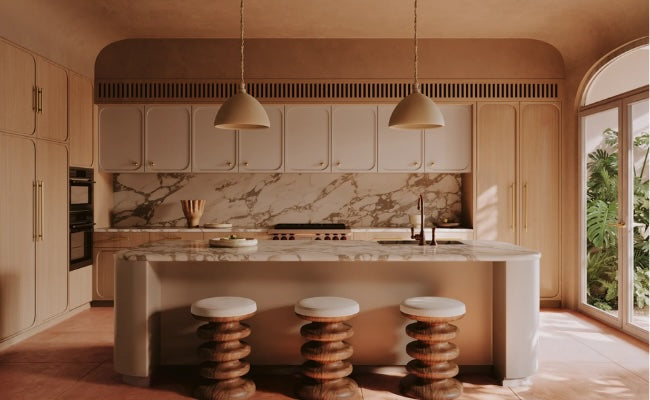
Brushed brass is characterised by its warm golden undertones and subtle brushed texture. Unlike polished brass, it feels softer, more understated and inherently architectural.
Brushed brass pairs beautifully with:
-
Natural oak joinery
-
Warm white cabinetry
-
Limestone and travertine
-
Taj Mahal quartzite
-
Textured plaster finishes
-
Layered coastal interiors
Its warmth makes it particularly well suited to relaxed, material-driven spaces including Coastal and Contemporary spaces.
Brushed brass is often chosen when the goal is to create warmth, depth and a sense of quiet luxury without feeling overly decorative.
What Is Satin Nickel?
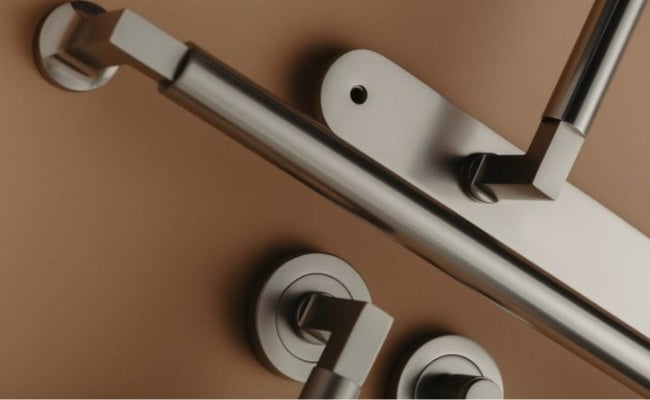
Satin nickel offers a softer interpretation of traditional silver-toned hardware.
Rather than the cool reflectivity of polished chrome, satin nickel introduces subtle warmth while maintaining a clean, contemporary appearance.
Satin nickel works particularly well with:
-
Pale oak cabinetry
-
White and greige colour palettes
-
Marble surfaces
-
Concrete and porcelain finishes
-
Minimalist architectural interiors
Its versatility allows it to complement a broad range of material palettes, making it a popular choice throughout our Architectural Collection.
Brushed Brass vs Satin Nickel: The Key Differences
Warmth
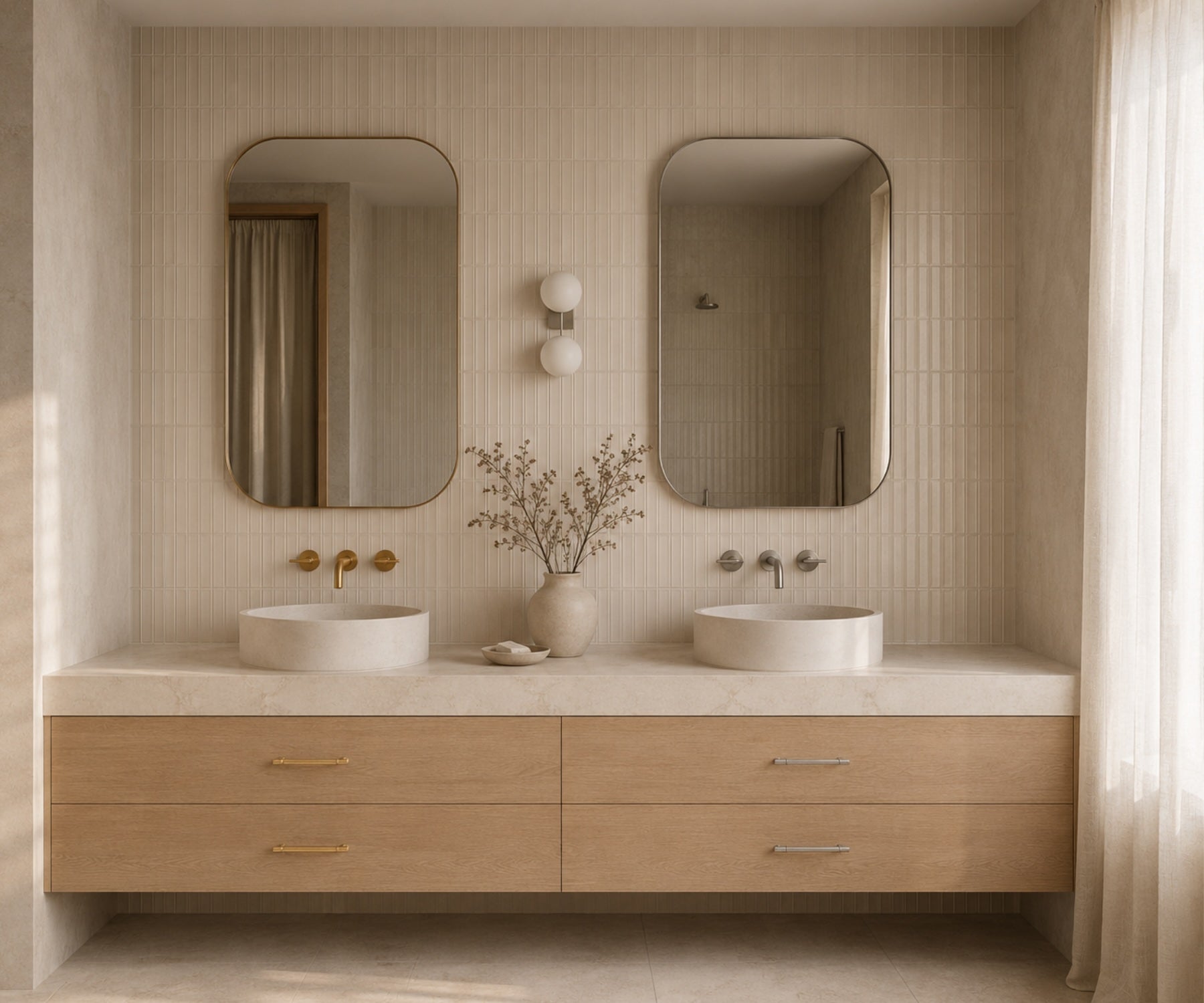
If warmth is the priority, brushed brass generally provides a richer and more inviting appearance.
Its golden undertones naturally enhance timber grain, warm stone and layered interior palettes.
Satin nickel remains neutral and restrained, making it ideal for homeowners seeking a lighter and more contemporary aesthetic.
Contrast
Brushed brass creates greater contrast against white cabinetry and pale surfaces.
Satin nickel blends more seamlessly into surrounding materials, creating a softer overall look.
Material Pairings
Brushed brass performs particularly well alongside:
-
Travertine
-
Limestone
-
Taj Mahal quartzite
-
Warm oak joinery
-
Textured coastal materials
Satin nickel is often better suited to:
-
Marble
-
Light porcelain
-
Concrete-look surfaces
-
Crisp architectural detailing
-
Cooler neutral palettes
Longevity
Both finishes are timeless when paired thoughtfully with the surrounding materials.
Rather than focusing on trends, it is generally more valuable to consider which finish best complements the architectural language of your home.
Which Finish Works Best In Coastal Interiors?
For most coastal-inspired interiors, brushed brass tends to feel more natural.
Its warmth complements the textures and materials commonly found within coastal design, including:
-
Pale oak
-
Limestone
-
Linen tones
-
Textured ceramics
-
Natural stone benchtops
Brushed brass introduces subtle warmth without overpowering the space, making it a natural fit within our Coastal Collection.
However, satin nickel can also work beautifully within more contemporary coastal interiors where a lighter, cleaner and more restrained palette is desired.
Our Recommendation
If your home features warm timber, natural stone and layered textures, brushed brass will often create the most cohesive result.
If your aesthetic leans towards crisp minimalism, soft greys and contemporary detailing, satin nickel may be the stronger choice.
Ultimately, the best finish is the one that feels consistent with the materials, textures and mood of the overall space.
Explore Hardware Finishes
Whether you're drawn to the warmth of brushed brass or the understated refinement of satin nickel, selecting a finish that complements your interior palette is key to creating a cohesive home.
Further Reading
-
Coastal Kitchen Hardware Ideas
-
Living Finishes vs Protected Finishes
-
How To Choose Cabinet Hardware
-
Architectural Hardware Finishes Explained